
Does Every Asheville Crawl Space Need Encapsulating?
Not every crawl space in Asheville needs encapsulating. It's necessary when moisture won't stay out, showing up as a musty smell, damp joists or sweating ducts. Closing one up takes a permit and a way to dry the air, such as a permanently installed dehumidifier.
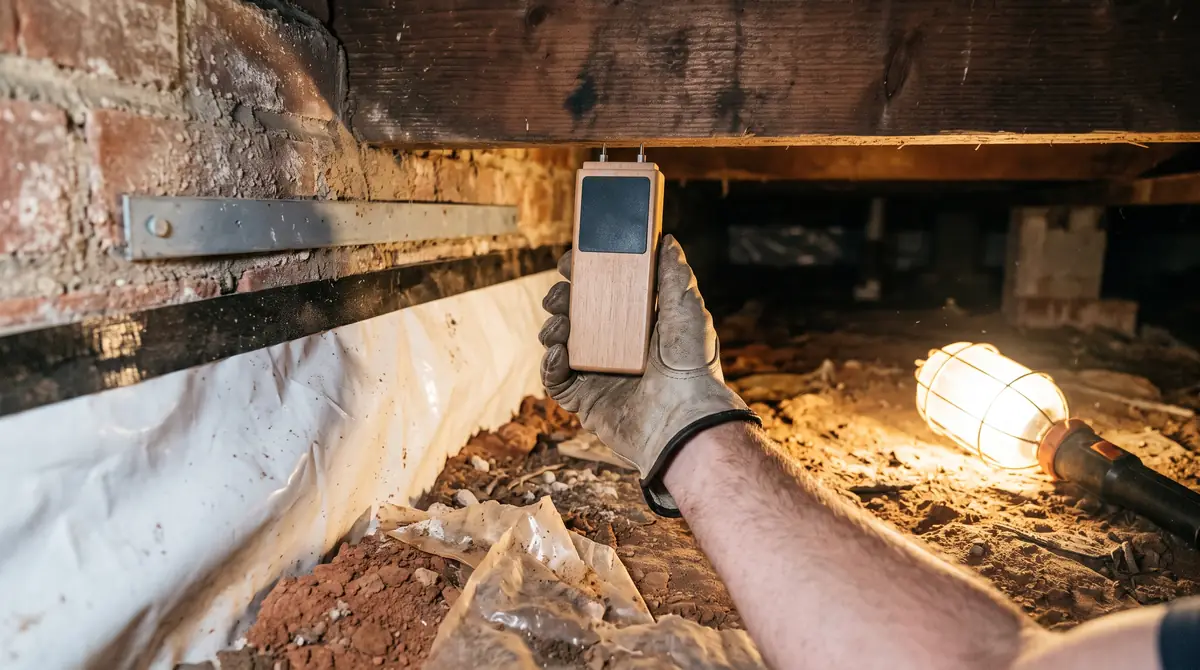
Helene's rain had to go somewhere, and the crawl space is the low spot under your house. If it left yours wet, or the house has smelled musty every summer since you moved in, sealing it up probably sounds like the answer. Sometimes it is. Plenty of crawl spaces need far less, though: a sound ground cover, gutters that work, and dry joists overhead.
Sealing one is a building project, not a weekend chore. It starts with paperwork, because the NC Office of State Fire Marshal says a permit is required to convert a conventional crawl space to a closed crawl space regardless of cost. That alone is a good reason to read the signs before anyone closes a vent.
Why does a damp crawl space need encapsulating?
A damp crawl space needs encapsulating because open vents and bare dirt keep feeding moisture to the wood above. Every humid day adds more, and the joists and subfloor soak it up. Closing the vents, sealing a liner over the dirt and adding moisture control cut off both sources, so the air under your floor can finally dry out.
When is my crawl space fine without encapsulating?
A crawl space in Asheville can do fine without encapsulating when it stays dry through a humid summer. The dirt floor has an intact ground cover, the joists feel dry, the ducts don't sweat, and there's no musty smell upstairs. In that case, keep the plastic in good shape and the gutters clear, and skip the permit and the dehumidifier.
What does a humid summer tell me about my crawl space?
A humid summer shows you whether outside air is your moisture problem. On muggy days, open vents let damp air reach the cool ductwork and framing, and water beads up there. If the ducts drip, the house smells musty, or the subfloor feels clammy in midsummer, the air is doing the damage, and closing the crawl space is the fix for it.
The signs a crawl space needs closing up
Encapsulating makes sense when moisture keeps winning, even after the gutters and grading are right. Most people notice it upstairs first, as a smell or a floor that feels clammy, and then find the cause underneath:
- A musty smell that's worst on humid summer days.
- Beads of water on the ductwork, or ducts dripping onto the dirt.
- Joists and subfloor that look dark or feel damp to the touch.
- Batts sagging off the floor framing or lying on the ground.
- Torn or missing plastic, with bare dirt showing.
Rain is a separate problem, and a big one here. When Helene hit Asheville, we saw nearly 14 inches of rain in three days, which is way more water than local yards and gutters were ever built to handle. If a storm like that put water under your house, the first job is getting it out and keeping it out. Plastic and a dehumidifier come after the water, never before.
If none of those signs show, a ground cover may be all your crawl space needs. That plastic belongs on the dirt whether the crawl space is vented or closed.
What we do to close one up
Encapsulating turns a vented crawl space into a closed one, and the state's residential code spells out what a closed crawl space needs. We work through it in this order:
- We get any standing water out and keep it from coming back.
- We clear out old poly, wet insulation and debris so the dirt floor is bare.
- We close the foundation wall vents and seal the gaps with caulk, gaskets or sealant to keep outside air out.
- We cover the dirt with heavy plastic, lapped at the joints, or run it up as a full liner sealed to the walls and columns.
- We add moisture control, since a closed crawl space has to dry its own air.
- Once it's all closed up, we check the humidity and the wood.
Moisture control can take one of several forms:
- A permanently installed dehumidifier with a condensate pump or drain, on its own outlet.
- Supply air ducted in from the house's air conditioning.
- An exhaust fan pulling crawl space air outside.
- A crawl space designed as heated and cooled space, part of the house.
Which one fits depends on your HVAC system and how the crawl space is laid out. We talk it through with you before we install anything.
When a new ground cover is enough
A fresh ground cover is enough when the crawl space is damp but never wet, the joists test dry, and the musty smell is faint or gone. It costs far less than closing the crawl space, which adds vent sealing, moisture control and a permit. Nothing's wasted if you close it later, either, because a closed crawl space needs plastic on the dirt too.
When the signs keep coming back after the water's handled, closing it pays off, downsides and all. Price climbs with the size of the crawl space, how much old material we haul out, and which moisture control fits the house.
If you're unsure, a humid stretch of summer will tell you. Sniff the house on a muggy afternoon, put a hand on the ductwork under the floor, and check the plastic for tears. Tell us what you find, and mention any water you saw after the last big storm.
Not sure your crawl space needs sealing?
A dry crawl space with a sound ground cover can stay vented, and a damp one that smells every summer is ready to close. When it's time, our crawl space encapsulation crew handles the vents, the liner and the moisture control. Water problems come first, and Craggy Crawlspace takes care of those too.
Frequently asked questions
Is crawl space encapsulation necessary?
It isn't necessary for every house. It's necessary when moisture keeps returning after the gutters, grading and plumbing are sorted out, and it shows up as a musty smell, damp joists or sweating ducts. If the dirt floor is dry, the plastic is intact and the house smells fine, a vented crawl space with a good ground cover can do its job.
Does a closed crawl space need a dehumidifier?
It needs some way to control moisture, and a dehumidifier is one way to do it. That unit is permanently installed, with a condensate pump or drain and its own outlet. The code also allows supply air ducted from the house's air conditioning, an exhaust fan, or treating the crawl space as heated and cooled space. Any of those keeps a closed crawl space from trapping damp air.
Is it cheaper to start with just a ground cover?
Starting with a ground cover costs much less than closing the crawl space. It's a smart first step when the space is damp but never wet. If the smell or the sweating ducts hang on through a summer, you can close it later. The ground cover still belongs under a closed crawl space, so that money isn't spent twice.
Can I seal a wet crawl space right away?
You shouldn't seal it while water's still on the floor. We get the water out and stop it coming back first, often with a sump pump in a perforated pit at the low spot. Then we pull out the old poly and any soaked insulation, and the soil and framing need time to dry. Sealing over wet ground traps the very moisture you're trying to get rid of.
Can I put down a new ground cover and leave the vents open?
You can, though open vents keep letting humid summer air in. New plastic stops damp rising from the dirt, and for a crawl space that's only a little damp, that's often the right fix. It can't keep that vent air off cool ductwork. When the ducts still sweat by midsummer, or the musty smell comes back, the vents are the next thing we'd close.
Want to see what yours would cost?
Hit the call button or send the form, and a local technician will call you back to talk through your house.