
Crawl Space Encapsulation for Swannanoa Homes
Swannanoa homeowners who repaired after Helene fixed what they could see. The crawl space under the floor is often the part nobody went back to. Our crawl space encapsulation work starts with what the flood left there and ends with a dry, sealed space.
Can you seal my crawl space once the flood cleanup's done?
Yes, we can, once the cleanup's done and the wood and dirt under the house have dried out. We know how hard Helene hit Swannanoa, so we test the joists and rim for any moisture it left behind. Then we seal the space so it stays dry. Wet insulation or silt the cleanup left down there comes out first.
What do I do about flood mud under the house?
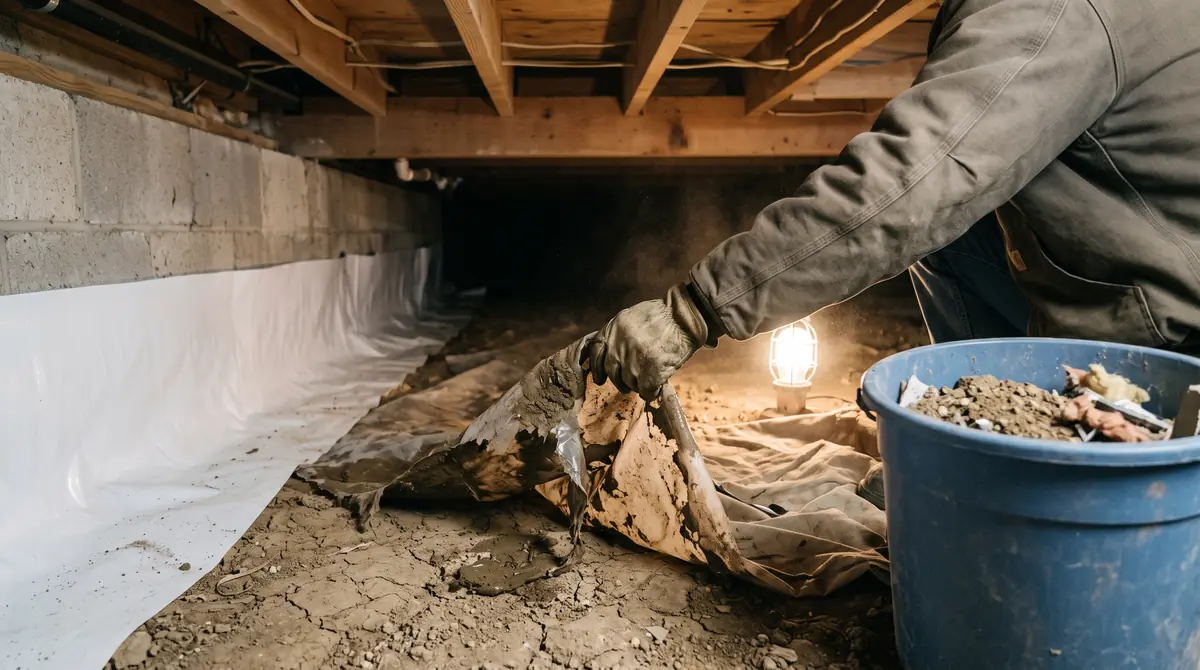
Mud under the house has to come out before anything else happens down there. Flood mud holds water against the piers and the bottom of the framing long after its surface looks dry, and it's where a musty smell often starts. Don't lay new plastic over it. Our crew digs it out first when there's more than a few shovelfuls or it's packed around the ductwork.
Do I need to replace insulation that got wet in the flood?
Most of the time, yes, insulation that sat in flood water should come out. Soaked batts sag, pack down and hold whatever the water carried in, and they stay damp against the subfloor for a long time. Drying them in place rarely works. We put new insulation back only after the framing under your floor has dried.
The part of the house the repairs skipped
After Helene, Buncombe County found 3% of Swannanoa's houses destroyed and 27% needing major repairs. If yours was one of the repaired ones, the work likely went into the rooms you live in: drywall, flooring, the kitchen. The crawl space took the same water. If no one's been under the floor since, the flood's mud and soaked batts may still be down there.
A crawl space that held flood water keeps giving it back to the house. You'll usually notice it upstairs first.
- A musty smell that came back after the new drywall and floors went in.
- New hardwood that's started to cup or pull apart at the edges.
- Floors that feel soft or bouncy near the outside walls.
- Bugs or droppings turning up around the floor registers.
We start by cleaning out the crawl space and replacing the insulation the water ruined. Where the flood softened the joists, framing repair comes before we seal the crawl space.
Why so much water comes down this valley
This valley sits low, and a lot of mountain drains into it. About 60 square miles drain to the part of Swannanoa that flooded so badly, and big mountains ring the valley. The Swannanoa Mountains on the south side top out at 4,200 feet. Rain on those slopes runs a long way downhill before it reaches the valley floor. During Helene, a rain gauge just north of town caught 13.21 inches. All that water headed downhill toward the houses on the valley floor, yours included.
Black Mountain's creeks and part of the Mount Mitchell watershed drain into the valley too. So the ground under your house takes water that fell miles away, not just what runs off your roof. A low lot doesn't need another big storm to get wet underneath, since a long, soaking rain will do it. That's why we look at where water reaches the foundation before we talk about sealing anything.
Small, old houses from the mill days
If you live in one of the small four-, five- or six-room houses from the old Beacon Mill village, your crawl space is likely shallow and tight. The framing above it has sat over damp valley air ever since the mill village grew in 1928. There's not much room between the dirt and the joists, so wet ground reaches the wood fast.
Look for the high-water line on your foundation
The stain the flood left on your block foundation or piers tells you how high the water got under the floor. Walk around the outside of the house. Look for a band of silt, a tide line or a change in color on the block. Any line up off the ground means water stood in the crawl space at least that high.
Then think back over who worked on the house. If none of them went under the floor, or you can't say for sure, that's where we'd look first.
Frequently asked questions
Is encapsulation of a crawl space worth it?
It's worth it when the crawl space stays damp and the house shows it. You'd notice a musty smell, soft floors or batts sagging off the joists. In a valley that collects this much mountain water, a sealed, dry crawl space keeps that damp out of the framing. If yours is already dry and the dirt is covered, you may not need the full job, and we'd say so.
How can I tell it's safe to seal after the water's gone?
You can't tell by looking, because the wood has to test dry, not just look dry. We put a moisture meter on the joists and the rim and read the humidity in the air under the house. Framing that sat in flood water can feel fine on the surface and still hold water inside, and sealing over that traps it against the wood. We don't seal until the numbers say it's dry.
Why does sealing cost more after a flood?
It costs more because there's more to do before we seal anything. A flooded crawl space usually has mud or silt to dig out, wet batts and torn plastic to haul away, and sometimes soft joists or a sill to fix. Each of those adds labor and material, and how much of each your house needs decides the price. A space that only got damp costs less to bring back than one that held standing water.
Finding out what's still under your floor
Tell us what made you wonder. It could be the line on the block, a smell that won't quit, or a floor that's gone soft. A quote from Craggy Crawlspace is free.
If Helene's line is on your foundation, give us a call or send the form, and a local technician will call you back about the house and what's under it.