
Crawl Space Encapsulation in Mills River
Mills River sits partly on low ground that floods, and on those lots water finds its way under the floor. Our crawl space encapsulation work here starts by getting that water out, so the space under your house can stay dry.
Where do I start if my house sits on low ground that floods?
Get the water out from under the house before anything gets sealed or insulated. On low ground here, we wait until the dirt and the framing stay dry through a hard rain. Then we seal the space so ground damp and outside air stay out. That's what keeps the floor above you dry on a lot that floods.
Is a vapor barrier enough if I leave the yard alone?
On a lot that takes on water, a vapor barrier alone usually isn't enough. It keeps damp from rising out of the dirt into the air, but floodwater runs right over and under it. With the yard left as it is, we have to handle the water inside the foundation first. We'd treat the barrier as one part of sealing the whole space, after it's dry.
Part of town is low ground that floods
About 15% of the Town of Mills River is floodplain or flood-prone ground, and that's 3.25 square miles that can flood over and over. If your house sits on that ground, the water that crosses the yard in a hard storm doesn't stop at the foundation. It gets under the floor and soaks the dirt in the crawl space. That dirt stays wet long after the grass has dried.
You'll often smell it before you see it. The rooms over the crawl space pick up a musty smell, and the floor can feel damp or cold. Even a lot that floods only now and then can keep the air under the house damp well after the storm.
When the water keeps coming back under the floor
Every flood leaves something behind under the house, and it piles up. Insulation soaks through and drops onto the dirt. Old plastic tears or ends up buried in mud. The joists and the subfloor stay damp, and that's when you start to see mold on the wood or a spot in the floor that feels soft.
None of it dries out while the ground underneath stays wet. We clear out what the water ruined and deal with the water itself, or the next storm puts you right back where you started.
Why the fix happens under the house
On a low lot here, most of the fix happens inside the foundation walls. If you regrade the yard or build it up with soil, you're working on ground the Hazard Prevention Ordinance regulates. Since October 6, 2025, that Town Council rule has covered every flood prone area in town. So the yard isn't the easy first step it might be on higher land.
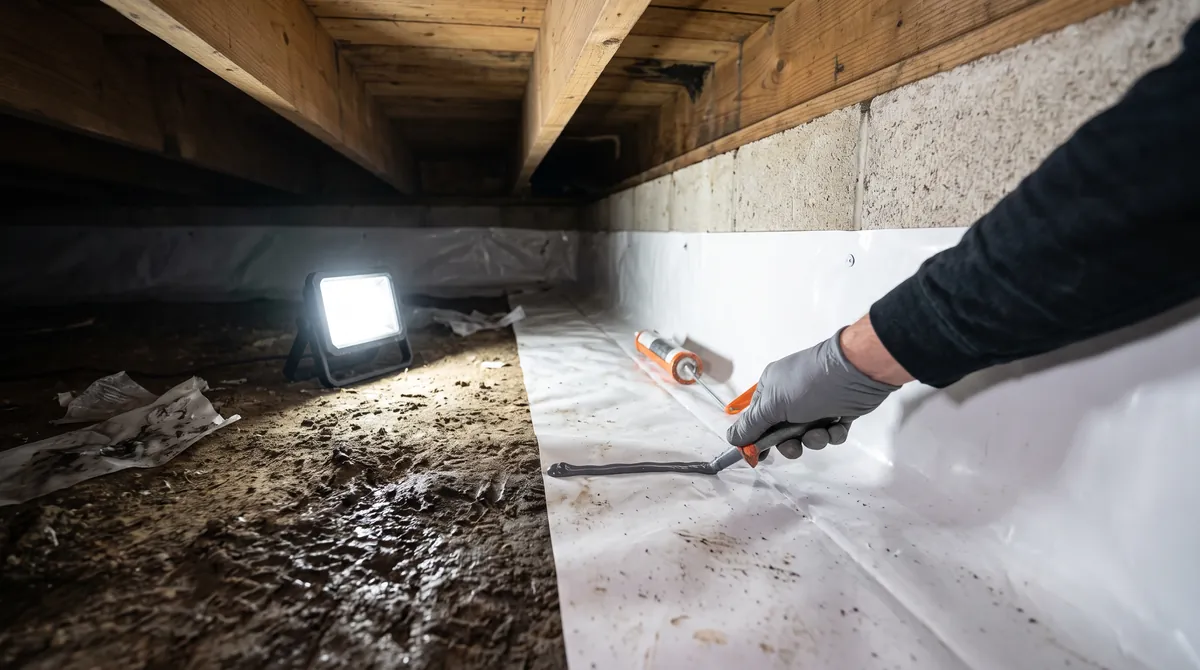
That's why we plan the job from underneath. It starts with getting the standing water out and waterproofing the crawl space, since we won't seal anything over wet dirt. Once it stays dry after a hard rain, sealing the crawl space and a dehumidifier keep it that way.
Frequently asked questions
Can I seal the crawl space if water still gets in after storms?
You shouldn't, because sealing over water traps it under the plastic and against the wood. The dirt never gets a chance to dry, and the damp works up into the joists. We get the water out and stop it coming back before any plastic goes down. That's usually most of the job in the low parts of Mills River.
Why does fixing a crawl space on low ground cost more?
There's more to do before any sealing starts. We have to get the standing water out, pull the soaked insulation and old plastic, and give the water a way to leave for good. A lot that floods again and again may also need a dehumidifier to keep up. Those are the parts that move the price. On a dry lot up the hill, most of them aren't needed.
Does a dehumidifier help after high water?
It helps once the standing water is gone, but it can't take the place of getting that water out. A dehumidifier pulls moisture from the air. It won't move a puddle off the dirt, and with the vents still open it fights the outside air all summer. After a flood we clear the water first. Then the unit dries what's left in the wood and keeps the air dry once the space is sealed.
My lot floods and the crawl space stays wet
The first thing our Craggy Crawlspace crew will ask about is how high the water got and how often it comes back. That tells us how much of the job is water work and how much is sealing the space. What you've seen in the yard and smelled upstairs is plenty to start with.
If your house sits on the low ground in town, call or send the form, and a technician from nearby calls you back about the house and the water.