
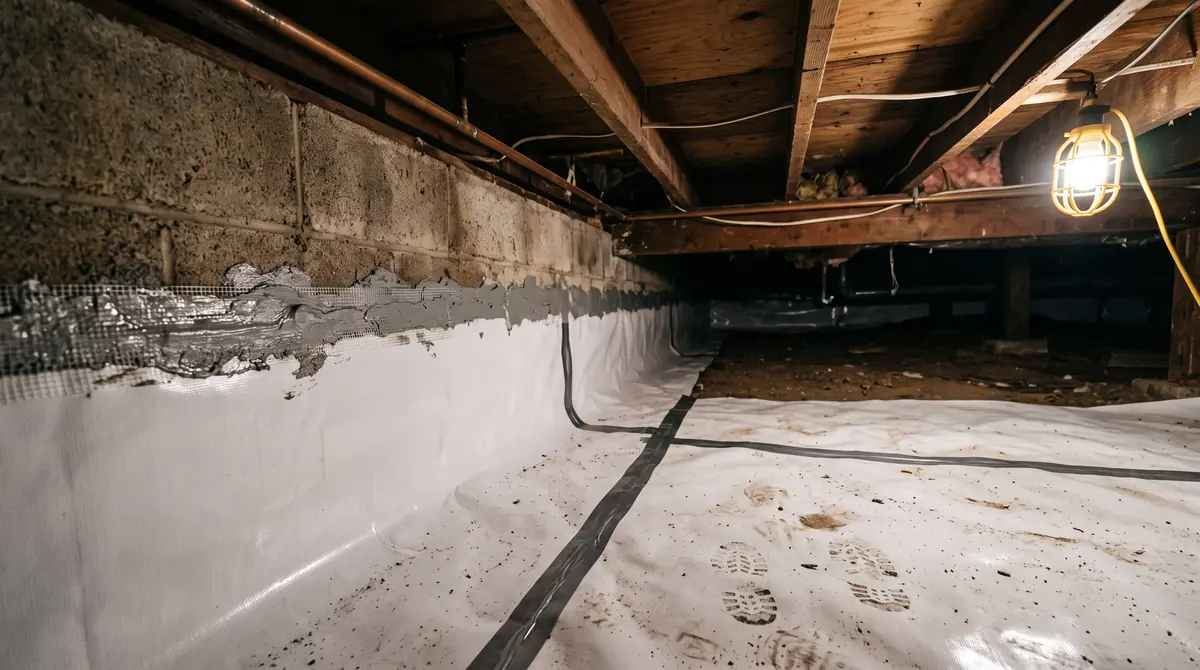
Crawl Space Encapsulation for Candler Homes
In Candler, two creeks meet on low ground that holds water long after a flood. We clear out what the water left under your house, dry it out, and finish with crawl space encapsulation so the floor above stays dry.
What should happen first once creek water gets under the house?
We pump out the standing water and shovel out the mud before anything else. Floodwater leaves silt on the dirt and soaks the insulation, and both keep the joists and subfloor wet for a long time if they stay. Once that's gone, the framing can start drying, and we can see which boards, if any, went soft.
Does living near the creek change the job?
It does, because sealing the crawl space won't do much good until we've dealt with the creek water. On the flat ground by the creeks, we usually have to clear and dry a flooded crawl space first, then keep the water out after hard rain. Up the slope, damp ground is often the whole problem, and sealing alone gets you a dry crawl space.
Will the musty smell go away once the water dries up?
The smell sits in what the water left behind, so drying up the puddles won't clear it. The mud on the dirt, the insulation that soaked through and any wood that stayed wet keep giving it off. It fades only after we get that material out and keep the space dry. On low ground near a creek, the soil keeps feeding moisture to anything left down there.
The low ground by the creeks stays wet
Candler sits where Hominy Creek and South Hominy Creek meet, and when they rise, the flat ground beside them takes the water first. If your house sits low near either one, the soil under it stays wet long after the creek drops back.
That wet soil doesn't stay out in the yard. It runs right under the crawl space, and over bare dirt the damp rises into the air below your floor. The joists and subfloor soak it up, and on a warm, still day you smell it in the rooms above. Water never has to reach your door for this to happen.
A flood leaves more under the floor than water
Helene put 16.18 inches of rain on Candler. When Tropical Storm Fred flooded it in 2021, people here were still cleaning up six months later. The part under the house often never got finished, because nobody crawled down there to look. Once the water drained off, it probably left some of this behind:
- A layer of silt and mud over the dirt that keeps everything it touches wet.
- Insulation that soaked up water and now sags off the floor framing or lies on the ground.
- Old plastic with a puddle trapped on top of it or underneath.
- Joists and subfloor that stayed wet long enough to darken, grow mold or go soft.
- A musty smell that comes back every time the weather turns humid.
None of that dries out on its own this close to the creek. As long as it stays down there, so does the damp.
Dry it out first, then seal it up
When creek water's been in the crawl space, the order of the work matters. The water, the mud and the soaked material all have to come out, and the wood has to dry before we seal anything. Close it up any sooner and you've trapped the flood under your floor.
For most flooded houses near the creeks, that starts with water removal and cleaning out the mud and wet insulation. Where water keeps coming back after every hard rain, waterproofing is next, and encapsulating keeps the ground's damp away from the framing.
A house that's only had damp air, never floodwater, often needs far less. At Craggy Crawlspace, we tell you which kind you've got after we've seen how high the water came, what it left on the ground and how wet the wood still is.
Frequently asked questions
Can my crawl space get wet if the creek never reached my yard?
Yes, because the water can come from underneath instead. It happens most along Hominy Creek and South Hominy Creek, where ground water sits high after a wet spell and seeps up through the dirt under the house. Rain soaking into the soil around the foundation does the same. You'd notice it as a musty smell, damp insulation, or wood that feels cool and wet to the touch.
Can you still seal a crawl space that has flooded?
We can, once it's clean and dry. Sealing over mud, wet insulation or soggy wood locks the moisture in with it, so we take the flood's leftovers out first and give the framing time to dry. If water still gets in after heavy rain, we stop that before we close anything. After that, a crawl space that once took on water seals up like any other.
Why don't two quotes for the same crawl space match?
Most of the time, the two quotes don't cover the same work. After a flood, one company might price the sealing alone, while another counts the mud, the soaked insulation and the drying that have to come first. How much has to come out, whether water still gets in, and any soft wood all change what it costs. Ask each one what work its price covers, so you're comparing the same job.
Find out what the flood left under your floor
Let us know when the water got in and what you've noticed since, from the smell to a floor that feels soft. We'll go over what your house needs and what moves the price. The quote is free.
When the creek's been under your floor, phone us or fill in the form, and a technician based nearby rings you back about what the water left.